
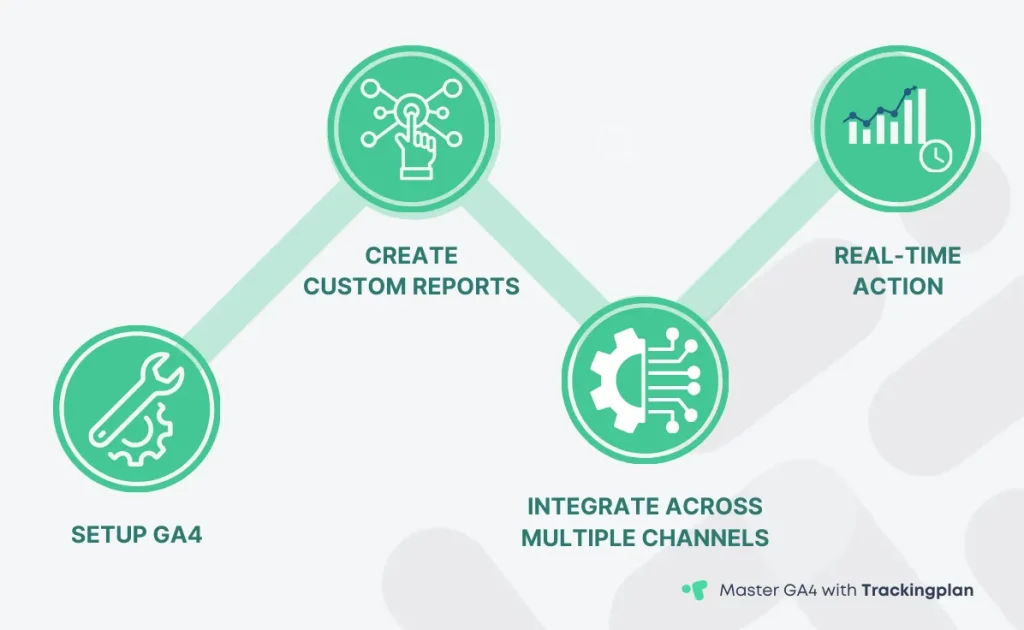
A strong GA4 setup helps businesses understand customer behavior, improve reporting clarity, and build a more reliable analytics foundation for growth decisions.
GA4 can be a powerful analytics platform, but only when it is configured with a clear structure. A poor setup often leads to confusing reports, incomplete event data, and limited insight into how users move through the customer journey.
What You’ll Learn
- why GA4 setup matters
- what makes reporting more reliable
- which events should be prioritized
- how better analytics supports decision-making
Start With Business-Critical Events
Your GA4 setup should prioritize meaningful business actions like purchases, lead submissions, booked calls, form completions, and other measurable conversion steps.
Create a Clear Event Naming Structure
Consistent naming helps teams maintain cleaner reports and easier analysis. A structured approach also supports smoother integration with platforms and reporting systems.
Track the Full Funnel
A strong GA4 configuration includes awareness, engagement, and conversion events. This helps businesses understand drop-off points and optimize the full user journey.
Make Reports Easier to Use
Analytics should support decisions, not create confusion. Clean event mapping, useful dimensions, and business-focused reporting make GA4 more valuable across teams.
Key Takeaways
- GA4 works best with structured implementation
- business-critical events should come first
- clean naming improves reporting clarity
- journey-based tracking leads to better insights
FAQ
What is the biggest GA4 setup mistake?
Tracking too many low-value events without a clear business goal is one of the most common issues.
Should GA4 track the full funnel?
Yes. A strong setup should cover both engagement and conversion activity.